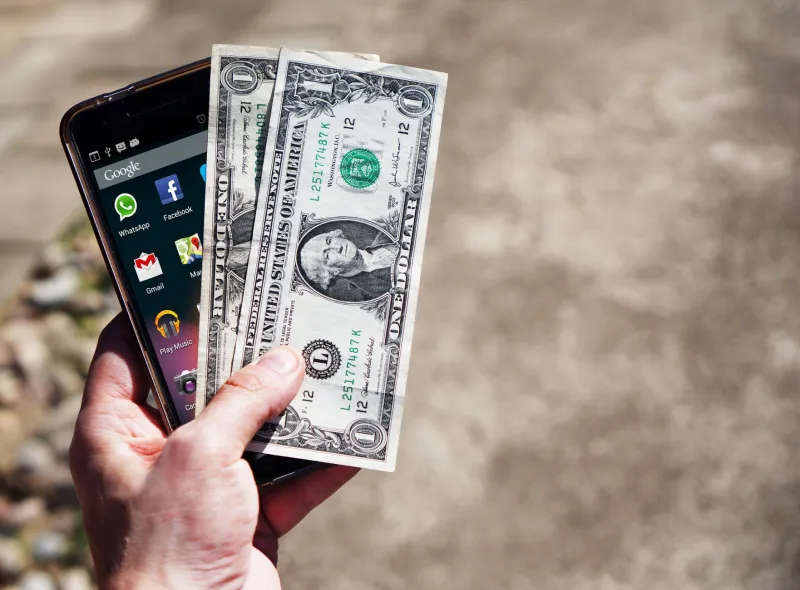
You Clicked 'Start Free Trial.' Your Wallet Signed Something Else.
Photo: Tijmen Stam / IIVQ, CC BY 2.5, via Wikimedia Commons
Here's a fun experiment: open your bank statement, search the last twelve months for recurring charges, and try to name what each one is for. If you're like most Americans, you'll find at least one subscription you cannot explain. Not one you forgot about — one you genuinely cannot identify.
That's not absentmindedness. That's design.
The Trial Isn't the Product. The Confusion Is.
Subscription dark patterns aren't sloppy UX. They're carefully engineered funnels where every step of starting is frictionless and every step of stopping is a maze. A few of the greatest hits:
The countdown that lies. "Free for 7 days" — except the trial starts the moment you tap, the billing date lands at 12:01 a.m. on day seven, and the reminder email (if one exists) arrives after the charge posts.
The pre-selected premium tier. The trial screen defaults to the $14.99/month plan. The $4.99 option is there, technically, in small gray text. You didn't choose premium. You failed to un-choose it.
The cancellation scavenger hunt. Sign up in 40 seconds from any device. Cancel? Log into the website (not the app — the app's delete button just takes you to the website), navigate three menus, sit through two retention screens, and confirm your password. Some services still require a chat with support, available 9 to 5 Eastern.
The 'pause' that isn't a cancel. You click cancel, and the flow offers to "pause" instead. Pause sounds responsible! It also keeps your payment method on file and quietly resumes billing when the pause window lapses.
The re-engagement charge. Cancelled six months ago, but a card-on-file agreement in the fine print lets the company bill you for an "annual renewal" on an account you haven't opened since the Obama administration's second term.
Each of these is individually deniable. Together, they form a business model. Regulators have noticed — the FTC has repeatedly targeted negative-option billing and click-to-cancel violations — but enforcement lags, and the patterns mutate faster than the rules.
The 20-Minute Subscription Audit
Enough diagnosis. Here's the remedy, and it takes less time than an episode of whatever show you're paying for and forgot.
Step 1: Pull the full list. On iOS, check your Apple ID subscriptions. On Android, Google Play subscriptions. Then check PayPal, Venmo, and — critically — your actual card statement, because plenty of services bill outside the app stores precisely to hide from those lists.
Step 2: Sort into three piles. Use it weekly. Use it monthly. Cannot identify. Be honest with pile one, too — "use it" and "feel guilty about not using it" are different things.
Step 3: Cancel from the pile you can't identify first. Look up the charge, confirm what it is, cancel immediately. No sentiment. If it turns out you needed it, resubscribing takes 40 seconds.
Step 4: Demand refunds where you can. Apple and Google both grant refund requests for accidental subscription charges, especially recent ones — the report-a-problem flow works more often than people assume. For direct billers, ask support directly. Many will refund one billing cycle to avoid a chargeback.
Step 5: Dispute strategically. For charges you never knowingly authorized, a card-level dispute is on the table. Use it for real cases, not buyer's remorse — but know that it exists, and that merchants take it seriously.
Making Life Harder for the Next Trap
A few habits that prevent the relapse:
- Use a virtual card number for free trials. When you cancel the card or it expires, the subscription dies with it.
- Calendar the trial end date the moment you sign up — set it two days early.
- Prefer monthly over annual for anything unproven. Annual pricing is a discount in exchange for a year of your inertia.
- Read the pre-confirmation screen. The one that says what you'll be charged and when. It's the only honest page in the whole funnel.
The Free Part Should Be Free
None of this means trials are evil — good software deserves to charge money, and AppLinked's whole reason for existing is helping people find tools worth paying for. The problem is the asymmetry: a system where signing up is a single tap and leaving requires a support ticket is not a system built on mutual enthusiasm. It's built on your forgetting.
Audit once a quarter, cancel without guilt, and treat every "start your free trial" button as the opening move in a negotiation — because that's exactly what it is.